


Although door hinges are relatively simple to construct, they bear the weight of the door, undergo repeated opening and closing movements over a long period of period, and are one of the most abrasive parts of the door system. Many doors creak after a period of use and are difficulty opening and close, droop or loosen on their hinges. These problems are caused not only by the quality of the product itself, but also by installation methods, usage frequency, door weight, working environment and routine maintenance. Understanding these causes can help solve problems in a timely manner and allow for more appropriate door hinges to be selected.
I. Noise caused by prolonged Long-Term Hinge Friction
Door hinges rotate constantly during use, creating constant friction between pins, bushing and other moving parts. Normally, proper lubrication can reduce frictional resistance and allow doors to open and close more smoothly.
If the hinge is not cleaned and lubricated for a long time, impurities such as dust and metal particles can enter the rotating parts, gradually increasing friction. There is a noticeable creaking or metallic scraping sound sound when moving parts within the hinge experience dry friction. This is even more evident for doors that are often opened and closed every day.
II. Insufficient Lubrication increases on and off resistance
Insufficient lubrication is a common cause of abnormal noise on door hinges. Especially in high-frequency use scenarios of industrial equipment, storage cabinets, metal doors, public facilities, hinges may experience multiple opening and closing cycles, and lubrication or grease may be gradually reduced.
When rotating part lacks lubrication, the hinge is not only prone to noise, but also increases resistance when opening and closing. If this goes on for a long time, the wear and tear on the moving parts becomes more severe. Therefore, in daily maintenance, the lubrication condition of the hinge should be checked regularly according to its structure and usage environment.
III. Loose fastening screws made the door swing
Loose door hinge do not necessarily mean the hinges themselves are damaged, but could also be caused by loose mounting screws. The door is impacted and vibrated every day as it opens and closes, and over time the retaining screws may gradually loosen.
If the screws are not tightened enough, gaps may form between the hinge and the door frame or door panel, causing the door to shake. The problem is more pronounced for heavier doors. Therefore, if you notice a change or wobble in the door's position as it opens and closings, you should first check the position of the hinges and fasteners.
IV. INTRODUCTION Door Weight Exceeding Hinge Load Capacity
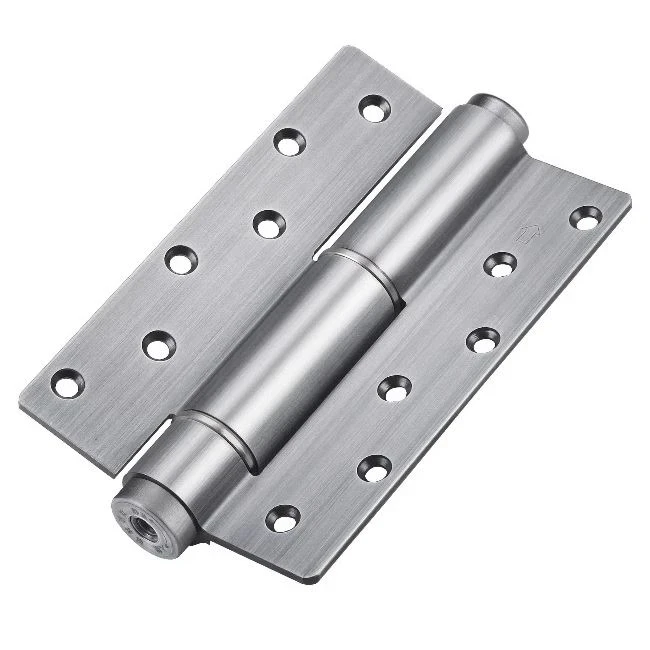
Door hinges needs to withstand the weight of the door for a long time, so carrying capacity is a crucial factor in product selection. If the door is heavy, but the normal hinge used is inadequate, the hinge may deform, wear or even loosen after long use.
Large wooden doors, metal doors, fire doors, industrial equipment doors are generally large in weight and heavy hinges of suitable specifications are required according to the actual load. In addition, the number of hinges should be appropriately configured according to the size of the door to ensure that the weight is evenly distributed and not concentrated on a single hinge.
V. Incorrect Installation Affects Hinge Lifespan
The installation accuracy of hinges directly affects performance of hinges. If the hinge is not correctly installed, securely fastened, or multiple hinges do not maintain a proper vertical and horizontal relationship, additional side pressure may be applied to the door during opening and closing.
This uneven stress increases wear and tear on the hinge rotation and can cause the door to sag. For industrial equipment doors and large doors, during installation, ensure that the stress distribution between hinges is correct and fixed according to product requirements.
VI. INTRODUCTION Humid and Corrosive Environments can lead to wear and tear
Working conditions can also affect the service life of door hinges. Hinges can be exposed to moisture, salt spray or corrosive substances for long periods of time outdoors, in coastal areas, food processing plants, chemical facilities and other humid environments.
If the hinge material lacks sufficient corrosion resistance, rust may appear on the surface, affecting moving parts. Rust increases the resistance of the hinge to rotation and, in severe cases, can even lead to blockage. Therefore, in humid or corrosive environment, stainless steel door hinges with good corrosion resistance or other suitable materials should be selected according to actual working conditions.
VII. High-frequency use of accelerated Hinge Wear
The service life of the Door hinges is limited, and the higher the frequency of opening and closing, the more cyclic load of the hinge. For example, doors of shopping malls, hotels, hospitals, schools and industrial production areas open and closing operations in large numbers every day.
High-frequency use will make dowels, bushing and connectors continuously resistant to friction and shock. If the hinge itself lacks structural strength or is improperly maintained, abnormal noise, loosening and difficulty opening and closing may occur. Therefore, for high frequency use scenarios, priority should be given to hinges with better durability.
VIII. How to Reduce Door Hinge Noises and Loosening
Basic inspection and maintenance habits should be established to reduce noise and loosening of door hinge. Clean hinge surface regularly for dust and impurities, check fixing screws for looseness, and lubricate moving parts according to the usage environment.
Lubrication alone may not solve the problem if the hinge is found to be severely deformed, corroded or rotated. In such cases, the hinge should be replaced in a timely manner. When replacing a product, the weight, size, frequency of use and environmental conditions of the door should be reassessed to avoid selecting a product with insufficient carrying capacity.

IX. Choosing the Right Door Hinge is key to reducing Failures
Abnormal noises or loosening of door hinges is often associated with poor product selection. When selecting hinges, the weight, size, material, opening and closing frequency, installation method and usage environment should be taken into account. Standard hinges are suitable for ordinary indoor doors, whereas industrial equipment doors, metal doors and large doors usually require heavy hinges with a high bearing capacity. For humid, outdoor or corrosive environments, corrosion resistance of materials should be a primary
consideration.
In general, door hinges often creak or loosen during long-term use, but through reasonable selection, standard installation, regular maintenance, can effectively reduce the failure rate. For B2B buyers and door manufacturers, when choosing hinges, not only the purchase price is considered, but also the carrying capacity, materials, durability and operational environment for more stable and durable performance.